Best Practices for Installing Transparent vs Reflex Level Gauges in Industrial Applications
Accurate level measurement is critical in industries such as oil and gas, petrochemicals, power plants, water treatment, and manufacturing.
Across the UAE, Saudi Arabia, Oman, and Egypt, industrial facilities operate under demanding conditions such as high temperatures, pressure variations, and harsh environments.
Choosing the right level gauge is only part of the process. Correct installation plays an equally important role in ensuring safety, accuracy, and long service life.
Two commonly used visual level measurement devices are the transparent level gauge and the reflex level gauge.
While both serve the same basic purpose, their installation requirements and best practices differ.
This article explains how to install each type correctly and highlights key considerations for engineers, maintenance teams, and procurement professionals in the Middle East.
Understanding Transparent and Reflex Level Gauges
Before discussing installation, it is important to understand the basic difference between these two instruments.
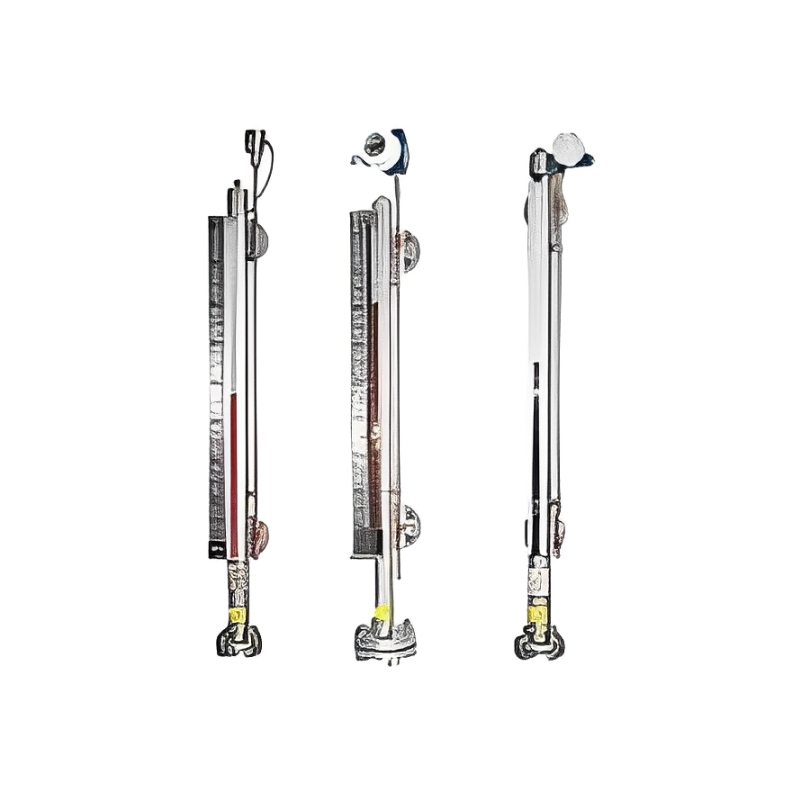
A transparent level gauge uses a clear glass tube or plate that allows operators to directly see the liquid level.
These gauges are commonly used in applications where clear visibility and accuracy are required, such as boilers, separators, and chemical tanks.
A reflex level gauge, on the other hand, uses specially designed prismatic glass.
The liquid appears dark while the vapor space appears bright due to light refraction. This makes it easier to read levels in high-pressure and high-temperature applications.
You can explore both product types in detail on the Globe United FZE product pages on
Transparent Level Gauges
and Reflex Level Gauges.
General Installation Guidelines for Both Gauge Types
Regardless of the gauge type, certain installation principles apply universally.
First, always ensure the vessel connections are properly aligned. Misalignment between the tank nozzles and the gauge can cause stress on the glass, leading to premature failure.
This is especially important in high-pressure systems commonly found in refineries and power plants in Saudi Arabia and the UAE.
Second, isolation valves should always be installed at both the top and bottom connections.
These valves allow safe maintenance and replacement without shutting down the entire system.
Third, install drain and vent valves where required. These are essential for cleaning, calibration, and safe depressurization during maintenance.
Lastly, always follow torque specifications for bolts and fasteners. Over-tightening is a common mistake that can damage glass components.
Best Practices for Installing Transparent Level Gauges
When installing a transparent level gauge, clarity and protection are key priorities.
The gauge should be mounted vertically and as close to the vessel as possible.
Longer connection distances increase the risk of inaccurate readings due to pressure loss or temperature variation.
Glass protection is especially important in industrial environments.
In regions like Oman and Egypt, where dust and temperature fluctuations are common, installing protective shields or guards helps prevent accidental impact damage.
Ensure that the glass material is suitable for the process fluid and operating temperature.
For high-temperature applications, using the correct glass grade is critical to avoid thermal shock.
After installation, perform a hydrostatic pressure test before commissioning.
This ensures there are no leaks and confirms the integrity of the seals.
For a deeper understanding of transparent level gauge functionality and applications, refer here.
Best Practices for Installing Reflex Level Gauges
A reflex level gauge is typically selected for more demanding operating conditions, so installation accuracy becomes even more critical.
The prismatic glass must be installed with the correct orientation.
Incorrect positioning will affect visibility and may lead to misinterpretation of the liquid level.
Always follow manufacturer markings to ensure the reflective surface faces the process fluid correctly.
Reflex gauges are often used in high-pressure systems.
For installations in oil and gas facilities across the UAE and Saudi Arabia, proper gasket selection is essential.
Gaskets must be compatible with both pressure and chemical exposure.
Avoid installing reflex gauges in areas exposed to direct sunlight without shading.
Excessive glare can reduce readability, particularly in outdoor installations common in Middle Eastern plants.
Once installed, check illumination conditions.
Proper lighting enhances the contrast effect of reflex glass, making level reading easier for operators.
Common Installation Mistakes to Avoid
Many level gauge issues are not due to product defects but installation errors.
One common mistake is ignoring thermal expansion.
In high-temperature environments, piping and vessels expand.
The gauge installation must allow slight movement without stressing the glass.
Another frequent error is neglecting routine inspection after installation.
Even a well-installed gauge requires periodic checks for gasket wear, glass clarity, and valve operation.
Improper cleaning during commissioning can also cause long-term issues.
Residue left inside the gauge can reduce visibility and affect accuracy.
Learning from earlier industry mistakes can significantly improve safety and performance.
Globe United FZE regularly emphasizes correct installation and maintenance practices to minimize downtime and risk.
Choosing the Right Gauge for Middle East Operating Conditions
In regions like the UAE, Saudi Arabia, Oman, and Egypt, industrial plants face unique challenges such as high ambient temperatures, sand exposure, and continuous operation cycles.
A transparent level gauge is often preferred in applications where direct visual confirmation is essential and process conditions are moderate.
A reflex level gauge is better suited for high-pressure, high-temperature environments where quick and clear level identification is required.
If you are still deciding between the two, this comparative guide on the Globe United FZE blog provides useful insights.
In short, proper installation of transparent and reflex level gauges is not just a technical requirement but a safety and performance necessity.
By following best practices tailored to each gauge type and considering regional conditions, industries can significantly improve reliability and measurement accuracy.
Whether you are upgrading an existing system or planning a new installation, understanding these differences helps ensure the right decision from day one.