Essential Process Instruments Used in Oil & Gas Plants
The oil and gas industry operates in some of the most demanding industrial environments, where precise monitoring and control are critical for maintaining safety, efficiency, and operational reliability. From upstream production facilities to refineries and petrochemical plants, instrumentation plays a vital role in ensuring that processes remain stable and compliant with industry regulations.
Accurate measurement of pressure, temperature, flow, and level allows operators to make informed decisions, prevent equipment failures, and optimize production. The Essential Process Instruments Used in Oil & Gas Plants form the backbone of process automation systems, helping facilities achieve consistent performance while minimizing operational risks.
Why Process Instrumentation Is Critical in Oil & Gas Plants
Oil and gas facilities handle hazardous fluids, extreme temperatures, high pressures, and complex chemical processes. Any deviation from normal operating conditions can lead to safety incidents, environmental risks, and costly downtime.
Process instrumentation provides real-time monitoring and control of critical process parameters. These instruments enable operators to detect abnormalities early, improve process efficiency, and maintain compliance with industry standards and regulations.
Key benefits of process instrumentation include:
- Enhanced operational safety
- Improved process optimization
- Increased equipment reliability
- Better environmental compliance
- Reduced maintenance costs
- Accurate production monitoring
Essential Process Instruments Used in Oil & Gas Plants
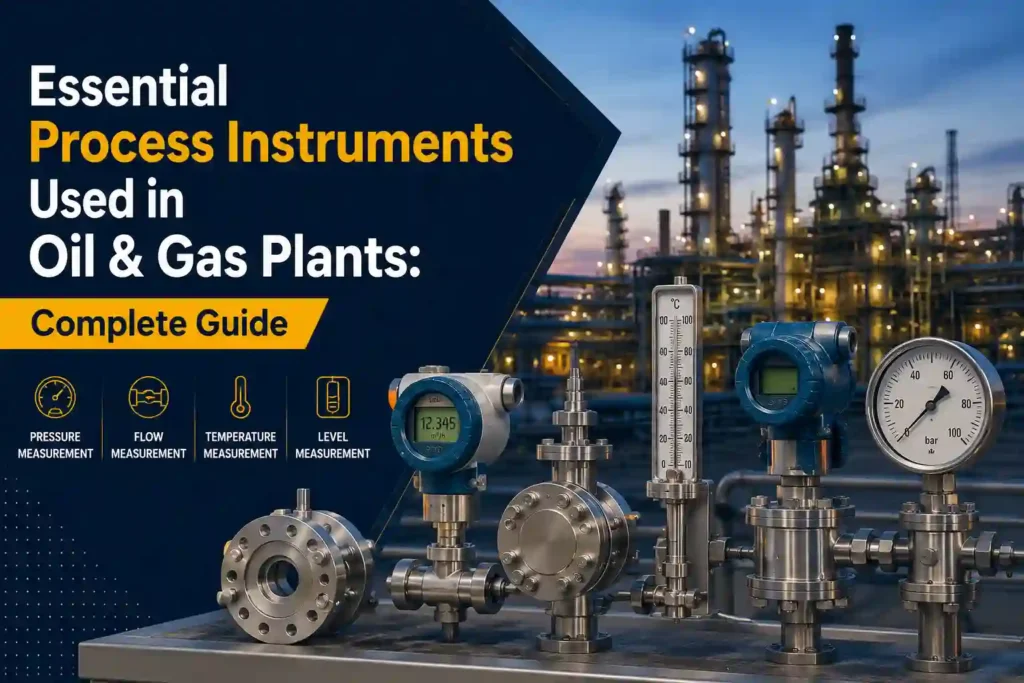
The following categories represent the most commonly used and critical instrumentation systems found throughout oil and gas facilities.
Pressure Measurement Instruments
Pressure measurement is essential for monitoring pipelines, storage vessels, separators, compressors, and process equipment.
Pressure Gauges
Pressure gauges provide local pressure indication and are widely installed throughout oil and gas plants. They help operators quickly assess system conditions and identify abnormal pressure fluctuations.
Pressure Transmitters
Pressure transmitters convert pressure readings into electronic signals that can be transmitted to control systems. These instruments support automated process monitoring and remote diagnostics.
Differential Pressure Instruments
Differential pressure instruments measure the pressure difference between two points. They are commonly used for flow measurement, filter monitoring, and level measurement applications.
Typical applications include:
- Pipeline pressure monitoring
- Pump and compressor protection
- Separator monitoring
- Filtration system performance assessment
Flow Measurement Instruments
Flow measurement is crucial for production accounting, process control, custody transfer, and resource management.
Orifice Plates
Orifice plates are among the most widely used primary flow elements in oil and gas facilities. They generate a differential pressure that can be used to calculate fluid flow rates accurately.
Restriction Orifice Assemblies
Restriction orifice assemblies are designed to reduce pressure in process lines safely. They are frequently used in gas distribution systems and pressure control applications.
Flow Nozzles
Flow nozzles provide reliable flow measurement in high-pressure and high-temperature environments. They are commonly found in steam and hydrocarbon applications.
Differential Pressure Flow Systems
These systems combine primary flow elements with differential pressure transmitters to provide accurate flow monitoring and control.
Applications include:
- Custody transfer systems
- Refinery process units
- Gas transmission pipelines
- Production facilities
Temperature Measurement Instruments
Temperature control is critical for maintaining process efficiency, protecting equipment, and ensuring product quality.
RTDs
Resistance Temperature Detectors (RTDs) offer high accuracy and stability. They are widely used in applications requiring precise temperature monitoring.
Thermocouples
Thermocouples are suitable for high-temperature environments commonly encountered in furnaces, reactors, and refinery process units.
Thermowells
Thermowells protect temperature sensors from harsh process conditions while allowing maintenance or replacement without shutting down operations.
Benefits of temperature monitoring include:
- Improved process stability
- Equipment protection
- Enhanced energy efficiency
- Better product consistency
Level Measurement Instruments
Reliable level measurement is essential for storage tanks, separators, pressure vessels, and process containers.
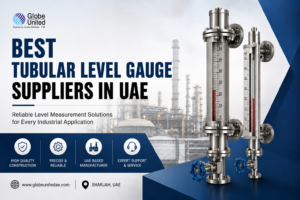
Magnetic Level Gauges
Magnetic level gauges provide continuous visual level indication and are ideal for hazardous or high-pressure applications.
Differential Pressure Level Measurement
Differential pressure transmitters can accurately determine liquid levels inside closed vessels and pressurized tanks.
Tank Level Monitoring Systems
Modern tank level monitoring systems integrate with control systems to provide real-time inventory management and operational visibility.
Common applications include:
- Crude oil storage tanks
- Gas-liquid separators
- Process vessels
- Chemical storage systems
Process Accessories and Supporting Instruments
Supporting accessories play an important role in maintaining measurement accuracy and system reliability.
Condensate Pots
Condensate pots protect pressure transmitters in steam service applications by maintaining a consistent condensate column.
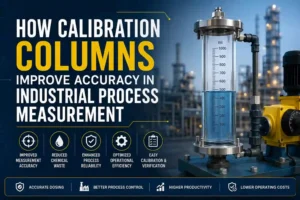
Calibration Pots
Calibration pots facilitate accurate testing and verification of pressure measurement systems.
Air Headers
Air headers distribute instrument air efficiently across multiple process instruments.
Flushing Rings
Flushing rings allow cleaning and maintenance of pressure sensing lines without interrupting operations.
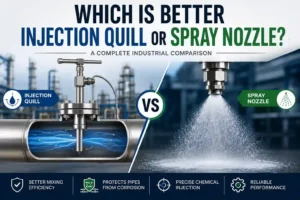
Injection Quills
Injection quills ensure safe and effective chemical injection into process pipelines.
Sight Flow Indicators
Sight flow indicators provide visual confirmation of fluid movement within process lines.
These accessories help improve system reliability while simplifying maintenance procedures.
Industrial Strainers
Industrial strainers protect critical equipment by removing debris and contaminants from process fluids.
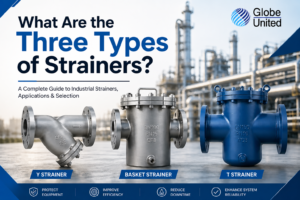
Y-Type Strainers
Y-type strainers are compact and suitable for pipelines with limited installation space.
Basket Strainers
Basket strainers provide a larger filtration area and are commonly used in high-flow applications.
Tee Strainers
Tee strainers offer efficient filtration for temporary and permanent process installations.
Benefits include:
- Equipment protection
- Reduced wear and damage
- Lower maintenance costs
- Improved system reliability
- Reduced operational downtime
Benefits of Using High-Quality Process Instruments in Oil & Gas Plants
Investing in quality instrumentation delivers significant operational advantages.
Key benefits include:
- Improved operational safety
- Higher measurement accuracy
- Better process efficiency
- Extended equipment lifespan
- Reduced maintenance requirements
- Enhanced regulatory compliance
- Increased production reliability
Accurate instrumentation enables operators to make informed decisions while minimizing process disruptions and operational risks.
Choosing the Right Process Instruments for Your Plant
Selecting suitable instrumentation requires careful evaluation of process requirements.
Important considerations include:
- Operating pressure ranges
- Temperature conditions
- Fluid characteristics
- Material compatibility
- Accuracy requirements
- Industry standards and certifications
- Installation environment
- Maintenance accessibility
Choosing properly engineered instruments ensures long-term performance and reliable operation under demanding oil and gas conditions.
Why Choose Globe United for Process Instrumentation Solutions
Globe United FZE provides a comprehensive range of process instrumentation products designed for the demanding requirements of oil and gas facilities.
With UAE-based manufacturing expertise, the company delivers precision-engineered solutions including flow measurement devices, thermowells, magnetic level gauges, strainers, restriction orifice assemblies, and other critical process components. All products are developed to meet international quality standards and support reliable operation across upstream, midstream, and downstream applications.
Combined with industry experience, custom-engineered solutions, and dependable technical support, Globe United helps customers achieve accurate measurement, enhanced safety, and long-term operational efficiency.
Conclusion
Modern oil and gas facilities depend on accurate measurement and control systems to operate safely and efficiently. The Essential Process Instruments Used in Oil & Gas Plants include pressure, flow, temperature, and level measurement devices, along with supporting accessories and filtration equipment that ensure reliable plant performance.
As industrial automation continues to evolve, advanced instrumentation will play an even greater role in predictive maintenance, process optimization, and smart plant operations. Selecting high-quality instruments is a critical investment in safety, efficiency, and long-term operational success.
Need reliable process instrumentation solutions for your oil & gas facility? Contact Globe United to explore precision-engineered instruments designed for safety, accuracy, and long-term performance.