Process Instrumentation Procurement in Egypt: A Practical RFQ Checklist
Buying process instruments for a project in Egypt becomes easier when the request for quotation contains the operating data that an engineer needs. A short enquiry that lists only a product name can lead to repeated questions, unsuitable material choices and delays during technical review.
This checklist is intended for engineering, procurement and maintenance teams comparing process instrumentation for Egyptian industrial projects. It explains the information that should be prepared before requesting a quotation from a manufacturer or supplier. Final selection must always be reviewed against the project specification and actual service conditions.
For an overview of Globe United’s relevant product families and enquiry route, visit the process instrumentation supplier for Egypt page.
Start with the process conditions
The product name is only the beginning of an industrial instrumentation enquiry. Provide the following information wherever it is available:
- Process fluid and its concentration
- Normal and design pressure
- Normal and design temperature
- Required measuring range or operating range
- Pipe size, vessel connection or nozzle details
- Material of construction required by the project
- Corrosion, erosion, vibration or pulsation concerns
- Hazardous-area or environmental requirements, if applicable
- Applicable project codes, standards and inspection requirements
If some values are not yet final, identify them as preliminary. This is more useful than leaving the supplier to make assumptions.
Level measurement enquiries
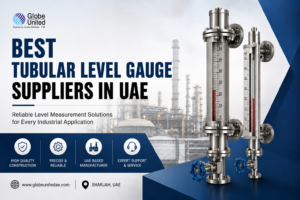
For a magnetic level gauge, float level gauge, tubular gauge or related level instrument, include the vessel orientation, visible range, centre-to-centre distance, connection size and rating, liquid density, interface conditions and any requirement for switches or transmitters.
Also state whether insulation, tracing, a scale, drainage, venting or a special chamber arrangement is required. These details help the supplier evaluate the complete assembly instead of quoting only the basic indicator.
Strainer enquiries
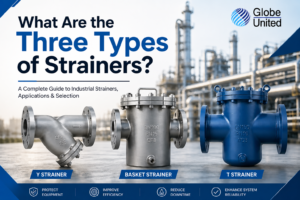
The correct strainer depends on the line, contaminant and maintenance approach. When requesting a basket strainer, Y strainer, TEE strainer or conical strainer, provide:
- Fluid, flow rate and line size
- Operating and design conditions
- Required filtration level or opening size
- Body, screen and trim materials
- End connection and pressure class
- Allowable clean and dirty pressure drop
- Expected contaminant type and quantity
- Drain, vent, differential-pressure or quick-opening requirements
Maintenance access is important. The installation area should allow the basket, screen or temporary strainer to be removed safely.
Restriction orifice and flow element enquiries
For a restriction orifice, multistage restriction orifice, orifice meter run or other flow element, provide the upstream and downstream pressures, minimum, normal and maximum flow rates, fluid composition, density, viscosity, temperature, pipe schedule and required material.
The supplier may also need information about allowable noise, cavitation, flashing, choked flow, straight-run availability and the intended measurement or pressure-reduction duty. A multistage arrangement should be selected through an engineering review, not from pressure ratio alone.
Injection quill and sampling enquiries
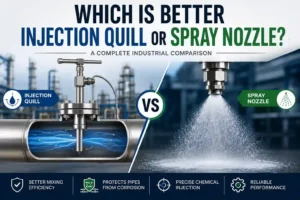
An injection or sampling assembly must match both the main process and the injected or sampled fluid. Include the main line conditions, chemical name and concentration, injection rate, insertion length, mounting orientation, connection details and material compatibility requirements.
State whether the enquiry includes a check valve, isolation arrangement, atomising requirement, removable design or a specific distribution pattern. The final arrangement should follow the project piping and safety requirements.
Documents and inspection
List the required documents in the RFQ instead of requesting an undefined document package. Depending on the project, the list may include drawings, material certificates, inspection and test plans, pressure-test records, welding records, NDE reports, calibration certificates, coating records, data sheets and operating instructions.
Clearly identify any client witness, hold or review points. Document availability and format should be confirmed before order placement.
Commercial and delivery questions
A complete commercial enquiry should state the required quantity, delivery destination, requested delivery date, packing requirements, quotation currency and applicable Incoterm. If the project requires vendor registration or a specific submittal format, include it at the enquiry stage.
Globe United is based in Sharjah, UAE. Delivery scope, lead time, documentation and inspection requirements for Egypt should be confirmed for each enquiry. This article does not imply a local Globe United office or stockholding in Egypt.
Final RFQ checklist
- Product type and quantity
- Completed data sheet or clearly stated process data
- Connection size, type and rating
- Materials and corrosion requirements
- Applicable standards and project specification
- Testing, inspection and document requirements
- Tag numbers and required drawings
- Delivery destination and requested date
- Commercial terms and quotation format
Request a technical quotation
When the available process data is organised before the enquiry, the technical and commercial review can be more focused. Send the project specification, data sheets and required document list through Globe United’s official enquiry route for review.
Contact Globe United to discuss a process instrumentation RFQ for an Egyptian project.