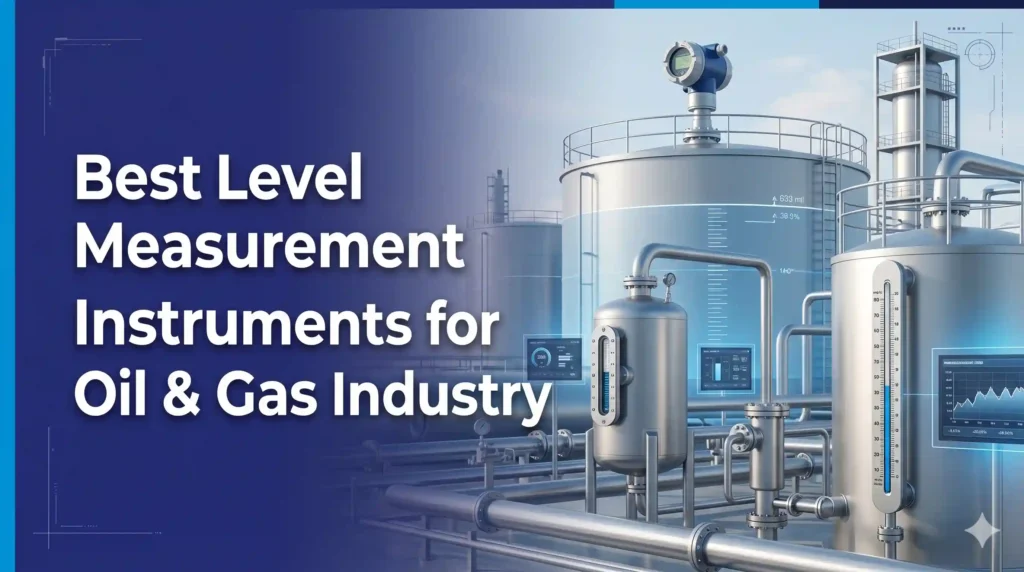
Best Level Measurement Instruments for Oil & Gas Industry
The oil and gas industry operates in highly demanding environments where accuracy, reliability, and safety are critical. From offshore drilling platforms and refineries to storage terminals and chemical processing plants, industries depend on advanced level measurement instruments for oil & gas applications to ensure efficient operations and prevent costly failures.
Choosing the right level measurement instruments for oil & gas facilities is essential because these environments often involve:
- High pressure and temperature
- Foam and vapor formation
- Corrosive chemicals
- Turbulence and agitation
- Hazardous operating conditions
- Interface measurement challenges
Using incorrect or low-quality level measurement instruments for oil & gas processes can result in inaccurate readings, tank overflows, production downtime, environmental hazards, and maintenance issues.
This guide explains the best level measurement instruments for oil & gas industry applications while focusing on practical solutions that improve operational performance and process reliability.
Why Accurate Level Measurement Matters in Oil & Gas
Modern oil and gas facilities rely heavily on automated level measurement instruments for oil & gas operations to maintain safety, inventory control, and process efficiency.
Accurate level monitoring helps industries:
- Prevent tank overflow
- Avoid dry running of pumps
- Improve separator performance
- Maintain process stability
- Reduce manual inspections
- Improve workplace safety
Selecting reliable level measurement instruments for oil & gas environments also helps reduce maintenance costs and improves long-term operational efficiency.
Common Challenges in Oil & Gas Level Measurement
Industrial tanks and process vessels often create difficult operating conditions that affect measurement accuracy.
Challenge | Impact on Measurement |
Foam and vapors | False readings |
High pressure | Sensor instability |
Corrosive fluids | Equipment damage |
Turbulence | Signal fluctuations |
Condensation buildup | Reduced sensor performance |
Interface measurement | Inaccurate separation monitoring |
The effectiveness of level measurement instruments for oil & gas applications depends on how well they handle these industrial challenges.
1. Radar Level Transmitters
Radar technology is one of the most reliable level measurement instruments for oil & gas facilities because it provides highly accurate non-contact measurement even in harsh environments.
Radar transmitters use microwave signals to measure liquid levels without being significantly affected by pressure, vapor, or temperature variations.
Best Applications
- Crude oil storage tanks
- Refinery vessels
- LNG and LPG tanks
- High-temperature process tanks
- Chemical storage systems
Main Advantages
- High accuracy
- Minimal maintenance
- Reliable in harsh conditions
- Suitable for vapor-heavy applications
- Excellent long-term performance
Recommended Supporting Products
For enhanced monitoring and visual level indication, industries often combine radar systems with:
- Transparent Level Gauges
- Magnetic Level Gauges
These products help operators visually monitor tank levels while maintaining accurate automated measurements.
2. Transparent Level Gauges
Transparent Level Gauges are widely used level measurement instruments for oil & gas applications where direct visual indication is required.
These gauges allow operators to monitor liquid levels clearly, even in high-pressure and high-temperature systems.
Best Applications
- Steam boilers
- Refineries
- Process vessels
- Chemical plants
- Pressurized tanks
Solution Benefits
- Clear visual monitoring
- Suitable for hazardous environments
- High durability
- Reliable performance in extreme conditions
Transparent gauges are especially useful in applications where operators require continuous visual confirmation of process levels.
3. Magnetic Level Gauges
Magnetic Level Gauges are highly reliable level measurement instruments for oil & gas facilities that provide safe and maintenance-friendly level indication.
These systems use magnetic float technology to display liquid levels externally without direct contact with process fluids.
Best Applications
- Corrosive liquid storage
- High-pressure tanks
- Offshore applications
- Chemical processing systems
Main Advantages
- Leak-free operation
- Low maintenance
- Long service life
- Excellent visibility
- Suitable for hazardous fluids
Solution Benefit
For industries facing corrosion-related maintenance issues, magnetic gauges provide a safer and more reliable alternative to conventional sight glass systems.
4. Guided Wave Radar (GWR) Level Transmitters
Guided Wave Radar systems are among the best level measurement instruments for oil & gas applications involving foam, turbulence, condensate, or interface measurement.
Unlike standard radar systems, guided wave radar uses a probe to guide microwave pulses directly to the liquid surface, improving accuracy in difficult process conditions.
Best Applications
- Oil-water separators
- Foam-heavy applications
- Process reactors
- Pressurized vessels
- Interface measurement systems
Advantages
- Stable readings during turbulence
- Excellent foam handling
- Accurate interface detection
- Reliable in pressurized tanks
Recommended Supporting Products
To improve measurement stability further, industries often use:
- Stilling Wells for Level Transmitters
- External Chambers
These products help stabilize liquid movement and improve measurement accuracy in turbulent process environments.
5. Stilling Wells for Level Transmitters
Stilling Wells are important supporting level measurement instruments for oil & gas systems designed to minimize turbulence and liquid movement around level sensors.
They create a calm measurement zone that improves transmitter stability and accuracy.
Best Applications
- Agitated tanks
- Offshore vessels
- Storage tanks
- Process reactors
Main Advantages
- Reduces signal fluctuations
- Improves radar performance
- Stabilizes liquid movement
- Enhances measurement accuracy
Solution Benefit
For industries experiencing unstable readings due to turbulence or filling operations, stilling wells provide a highly effective solution.
6. External Chambers
External Chambers are commonly used alongside advanced level measurement instruments for oil & gas applications to isolate level sensors from direct tank turbulence.
These chambers allow instruments to measure liquid levels more accurately in difficult operating conditions.
Best Applications
- High-pressure vessels
- Separator systems
- Process tanks
- Refinery applications
Advantages
- Stable measurement environment
- Reduced sensor exposure
- Improved maintenance access
- Better instrument protection
External chambers are especially valuable in applications where continuous process agitation affects level measurement stability.
Comparison of Best Level Measurement Instruments
Instrument Type | Best For | Main Advantage |
Radar Level Transmitter | Storage tanks | High accuracy |
Transparent Level Gauge | Visual indication | Direct monitoring |
Magnetic Level Gauge | Corrosive applications | Leak-free operation |
Guided Wave Radar | Foam and turbulence | Stable readings |
Stilling Wells | Turbulent tanks | Signal stabilization |
External Chambers | High-pressure vessels | Improved accuracy |
How to Choose the Right Solution
Selecting the best level measurement instruments for oil & gas operations depends on several important factors:
Key Selection Criteria
- Tank type
- Pressure and temperature
- Fluid characteristics
- Presence of foam or vapor
- Corrosive conditions
- Required measurement accuracy
- Maintenance requirements
For example:
- Radar systems are ideal for vapor-heavy environments
- Magnetic gauges work well in corrosive applications
- Guided wave radar performs best in turbulent conditions
- Stilling wells improve accuracy in agitated tanks
Choosing the correct combination of level measurement instruments for oil & gas facilities significantly improves operational reliability and process safety.
Why Industries Prefer Advanced Level Measurement Solutions
Modern industries are increasingly adopting smart level measurement instruments for oil & gas applications because they provide:
- Better automation integration
- Remote monitoring capability
- Improved operational safety
- Reduced maintenance downtime
- Higher process efficiency
Advanced technologies combined with supporting products like magnetic level gauges, external chambers, and stilling wells create more stable and reliable level monitoring systems.
Selecting the right level measurement instruments for oil & gas industry applications is critical for maintaining safe, efficient, and reliable operations.
Technologies such as radar transmitters, guided wave radar systems, magnetic level gauges, transparent level gauges, stilling wells, and external chambers each provide unique advantages depending on the application.
By choosing high-quality level measurement instruments for oil & gas environments, industries can:
- Improve measurement accuracy
- Reduce downtime
- Enhance operational safety
- Minimize maintenance costs
- Achieve long-term process reliability
For industries operating in harsh and demanding environments, investing in reliable level measurement solutions is essential for achieving efficient and uninterrupted operations.