Top Flow Control Devices Used in Oil & Gas Industries
In the oil and gas industry, precise flow control devices oil and gas applications are not just a requirement—it’s critical for safety, efficiency, and operational reliability. From upstream drilling to downstream refining, controlling the flow of liquids and gases ensures optimal performance and prevents costly failures.
Flow control devices oil and gas systems are engineered to regulate pressure, flow rate, and direction within pipelines and processing systems. Choosing the right equipment can significantly impact productivity and equipment lifespan.
In this blog, we explore the top flow control devices oil and gas industries rely on, their working principles, and how to select the right solution for your application.
What Are Flow Control Devices?
Flow control devices oil and gas operations depend on are mechanical components used to regulate, monitor, or direct the flow of fluids within a system. These devices are essential in maintaining process stability, preventing pressure drops, and ensuring accurate fluid distribution.
They are widely used in:
- Oil extraction and drilling operations
- Gas processing plants
- Petrochemical industries
- Refining and distribution systems
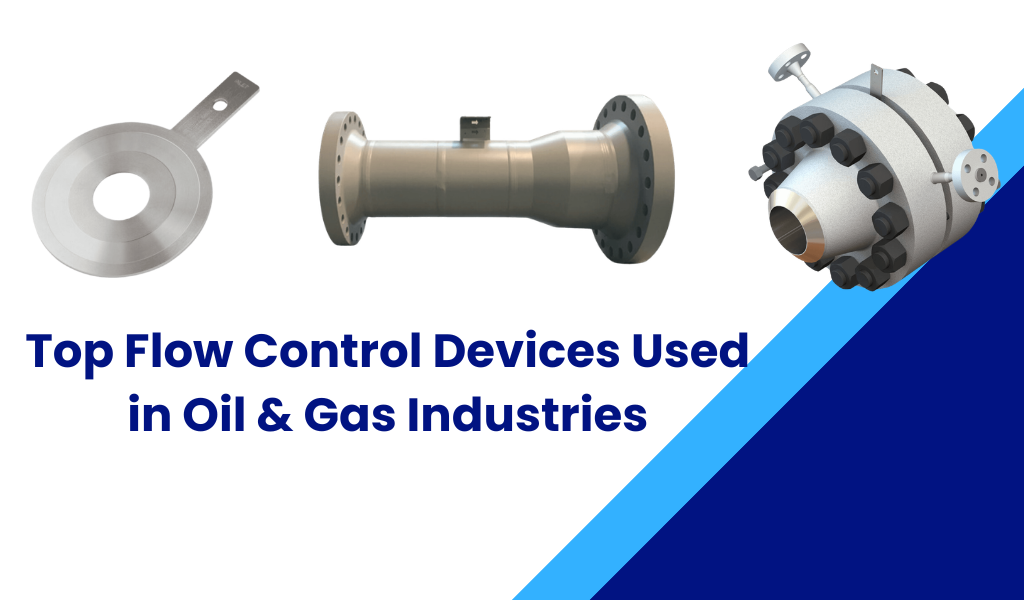
1. Restriction Orifice (RO)
A restriction orifice is one of the most widely used flow control devices oil and gas facilities depend on in high-pressure applications.
How It Works
It reduces fluid pressure by forcing it through a small opening, creating a controlled pressure drop.
Types
- Single-stage restriction orifice
- Multistage restriction orifice
Applications
- Pressure reduction in pipelines
- Flow regulation in gas systems
- Preventing equipment damage due to high pressure
Benefits
- Simple design
- Low maintenance
- Highly reliable in extreme conditions
2. Orifice Plate & Orifice Flange Assembly
Orifice plates are commonly used for both flow measurement and control in flow control devices oil and gas systems.
How It Works
A thin plate with a precisely machined hole is installed inside the pipeline, causing a pressure drop that helps regulate and measure flow.
Applications
- Flow measurement systems
- Steam and gas flow control
- Refinery operations
Benefits
- Cost-effective solution
- Easy installation and replacement
- High accuracy when calibrated correctly
3. Control Valves
Control valves are essential flow control devices oil and gas plants use for dynamic regulation in automated systems.
How It Works
They adjust flow rate based on signals from controllers, allowing real-time process control.
Types
- Globe valves
- Ball valves
- Butterfly valves
Applications
- Automated process control
- Chemical injection systems
- Refinery and processing plants
Benefits
- Precise control
- Suitable for varying flow conditions
- Integration with automation systems
4. Needle Valves
Needle valves are specialized flow control devices oil and gas engineers prefer for fine flow control where precision is critical.
How It Works
A slender, needle-like plunger adjusts flow in small increments.
Applications
- Instrumentation systems
- Low-flow applications
- Gas flow regulation
Benefits
- High precision
- Ideal for delicate operations
- Leak-tight sealing
5. Choke Valves
Choke valves are critical flow control devices oil and gas upstream operations rely on for managing well output.
How It Works
They control the flow rate and pressure of fluids coming from wells.
Applications
- Wellhead control systems
- Production flow regulation
- Pressure management
Benefits
- Handles high pressure and temperature
- Essential for well safety
- Durable in harsh environments
6. Flow Nozzles
Flow nozzles are advanced flow control devices oil and gas systems use in high-velocity fluid applications.
How It Works
They create a differential pressure that helps regulate and measure flow.
Applications
- Steam flow systems
- High-pressure pipelines
- Power plants
Benefits
- Better performance than orifice plates in certain conditions
- Suitable for high-temperature applications
- Long service life
How to Choose the Right Flow Control Device
Selecting the right flow control devices oil and gas applications require depends on several factors:
1. Pressure & Temperature Conditions
High-pressure environments require durable solutions like restriction orifices or choke valves.
2. Type of Fluid
Gas, liquid, or slurry applications require different device configurations.
3. Flow Rate Requirements
Precision applications benefit from needle valves, while large-scale systems require control valves.
4. Maintenance Needs
Choose devices with minimal maintenance for remote or hazardous locations.
5. Industry Standards
Ensure compliance with oil and gas industry regulations and safety standards.
Why Flow Control Matters in Oil & Gas
Efficient flow control devices oil and gas systems directly impact:
- Operational safety
- Equipment longevity
- Process efficiency
- Cost savings
Improper flow regulation can lead to pressure surges, equipment failure, and production downtime—making the selection of the right devices crucial.
Flow control devices oil and gas industries depend on play a vital role in ensuring smooth and safe operations. From restriction orifices to control valves, each device serves a specific purpose based on the application and operating conditions.
Understanding their functionality and selecting the right equipment can significantly enhance system performance and reduce operational risks.
If you’re looking for high-quality industrial flow control devices oil and gas applications require, working with an experienced manufacturer can make all the difference.